
Camel Spider in Dubai: Complete Guide to Identification, Dangers
If you live in Dubai or anywhere in the UAE, chances are you have heard spine-chilling stories about the camel spider. With its imposing size, lightning speed, and powerful jaws, the camel spider (scientifically known as a solifugid) has earned a fearsome reputation that stretches far beyond the desert dunes. But how much of that reputation is fact, and how much is fiction?
At Pest Control Dubai AE (pestcontroldubai.ae), our experts encounter all manner of pests across Dubai’s residential villas, commercial properties, and desert-adjacent communities.
In this comprehensive guide, we separate myth from reality, explain everything you need to know about camel spiders in the UAE, and tell you exactly what to do if you encounter one in or near your home.
Quick Answer: Camel spiders are not venomous and are rarely a direct threat to humans. However, their presence often signals a wider pest problem and their bite can be painful. If you spot one, contact a professional pest control team immediately.
What Is a Camel Spider? The Basics
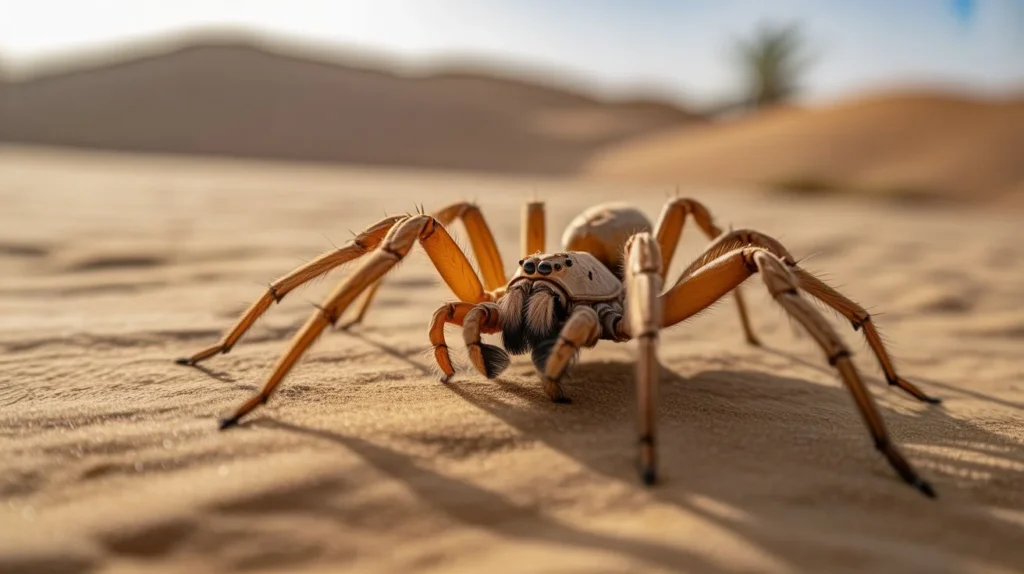
Despite the name, camel spiders are not true spiders. They belong to the order Solifugae a distinct group within the class Arachnida.
Other common names include wind scorpion, sun spider, and wind spider. Like spiders, they have eight legs, but they are neither spiders nor scorpions they are in a class of their own.
Scientific Classification
Kingdom: Animalia | Phylum: Arthropoda | Class: Arachnida | Order: Solifugae
In the UAE, three main families are commonly found: Galeodidae (the most widespread, including the large Galeodes arabs), Solpugidae, and Rhagodidae.
The species Galeodes arabs is the largest encountered in the region, with a leg span reaching up to 150mm (approximately 6 inches).
What Do Camel Spiders Look Like?
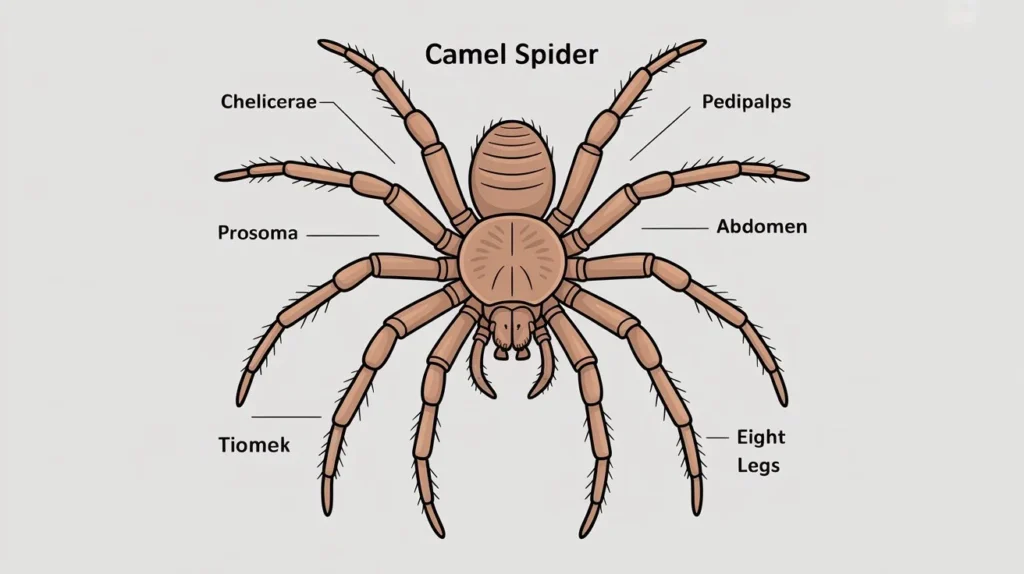
Size: Typically 4 to 6 inches in total length including legs though photos often exaggerate their size due to perspective
Color: Sandy-brown, tan, or beige, perfectly camouflaged against desert terrain
Body: Divided into two sections — the large, flattened prosoma (front) and the abdomen (back)
Legs: Eight long, hair-covered legs used for rapid movement
Chelicerae (jaws): The most distinctive feature — massive, powerful pincers that can be up to one-third of their total body length
Pedipalps: Two additional appendages near the mouth that act like antennae for sensing prey
Eyes: Multiple small eyes on the sides of the body
Where Are Camel Spiders Found in Dubai and the UAE?
Camel spiders are desert-adapted creatures. In the UAE, they are most commonly found in and around desert zones but they are increasingly seen in peri-urban areas, suburban villas, dairy farms, and desert resorts on the outskirts of cities like Dubai.
Common Locations in Dubai
Desert areas and sand dunes (their natural habitat)
Suburban villas near undeveloped desert land
Gardens with dense vegetation or debris
Campsites and desert safari zones
Storage rooms, garages, and dark corners
Under rocks, logs, in cracks, or in self-dug burrows
One key reason camel spiders venture into urban areas: artificial lighting. Outdoor lights attract large numbers of insects at night, which in turn attract camel spiders looking for a meal. This is a phenomenon increasingly seen across the outskirts of Dubai and neighbouring emirates.
Important: According to pest control professionals in Dubai, camel spider call-outs are less common than black widow spider reports. However, desert farms, resorts, and villas near sandy areas do report sightings particularly during the warmer months.
Camel Spider Behaviour: Facts vs. Myths
The Most Common Myths — Debunked
The camel spider became an internet sensation during the early 2000s, with wildly exaggerated stories circulating online. Let us set the record straight:
| Myth | Fact |
| They can run 30 mph | Their top speed is approximately 10 mph fast for an arachnid, but not superhuman |
| They are venomous | Camel spiders have NO venom glands. They are not venomous. |
| They are half the size of a human | Adults grow to around 6 inches photos are misleading due to camera perspective |
| They chase humans to attack | They chase shadows for shade in the desert heat not to attack people |
| Their bite causes flesh to rot away | They do liquefy prey with digestive fluids but this does not apply to human bites |
| They eat camels’ stomachs | Completely false they eat insects, small lizards, rodents, and small birds |
Are Camel Spiders Dangerous to Humans in Dubai?
This is the most searched question and the answer requires nuance. Camel spiders are NOT venomous. No venom is injected during a bite. However, ‘not venomous’ does not mean ‘harmless’.
Potential Risks
Painful Bite: Their jaws are powerful a bite can break skin and cause sharp pain, redness, and swelling
Risk of Infection: The main medical risk is secondary bacterial infection if a bite wound is not cleaned and treated promptly
Psychological Distress: Their size, speed, and appearance can cause significant fear and anxiety, especially for children
Pet Risk: Cats and dogs may investigate and get bitten even non-venomous bites can cause irritation in pets
Medical Note: If bitten by a camel spider, clean the wound thoroughly with antiseptic and seek medical advice if swelling, redness, or any signs of infection develop. Seek emergency care if you experience an allergic reaction.
Are They Protected in the UAE?
Yes. Under UAE Federal Law No. 24 of 1999, it is prohibited to collect camel spiders from the wild. The Environment Agency Abu Dhabi (EAD) actively monitors camel spider populations. This makes professional pest management even more important a qualified pest control company will know how to handle them responsibly and legally.
Signs You May Have a Camel Spider Problem
Because camel spiders are nocturnal and fast, you may not see one until it appears unexpectedly indoors. Here are signs to watch for:
• Direct sightings — spotting one or more camel spiders indoors or in your garden at night
• Finding them in shoes, camping bags, or stored clothing (a key risk during desert trips)
• Increased insect activity around your outdoor lights (camel spiders follow their prey)
• Pets behaving unusually around corners, under furniture, or in garages
• Small burrow-like holes in sandy garden areas or near the property foundation
Desert Trip Warning: Pest control professionals in Dubai specifically advise anyone camping or on desert trips to thoroughly check all belongings especially shoes and bags before packing up. Camel spiders can shelter in these items.
How to Prevent Camel Spiders from Entering Your Home in Dubai
The good news is that with the right precautions, you can significantly reduce the risk of camel spiders entering your property. Here is what our experts at Pest Control Dubai AE recommend:
Seal Entry Points
Seal all gaps, cracks, and openings around doors, windows, vents, and the property foundation
Use weather stripping and caulk on doors and window frames
Repair or replace damaged fly screens on windows and doors
Manage Outdoor Lighting
Switch outdoor lights from white bulbs to yellow or sodium vapour bulbs these attract fewer insects, and therefore fewer camel spiders
Position lights away from entry points where possible
Reduce Harborage Sites
Remove piles of leaves, garden debris, woodpiles, and clutter from around the property exterior
Keep garden areas tidy and trim vegetation away from the walls of your home
Clear storage areas — garages, attics, and storerooms — of clutter where camel spiders could hide
Address Moisture and Insects
Fix leaks and ensure good drainage damp areas attract the insects that camel spiders prey upon
Treat existing insect infestations (flying insects, ants, cockroaches) to remove the food source that attracts camel spiders
Professional Camel Spider Control in Dubai — Why You Need Experts
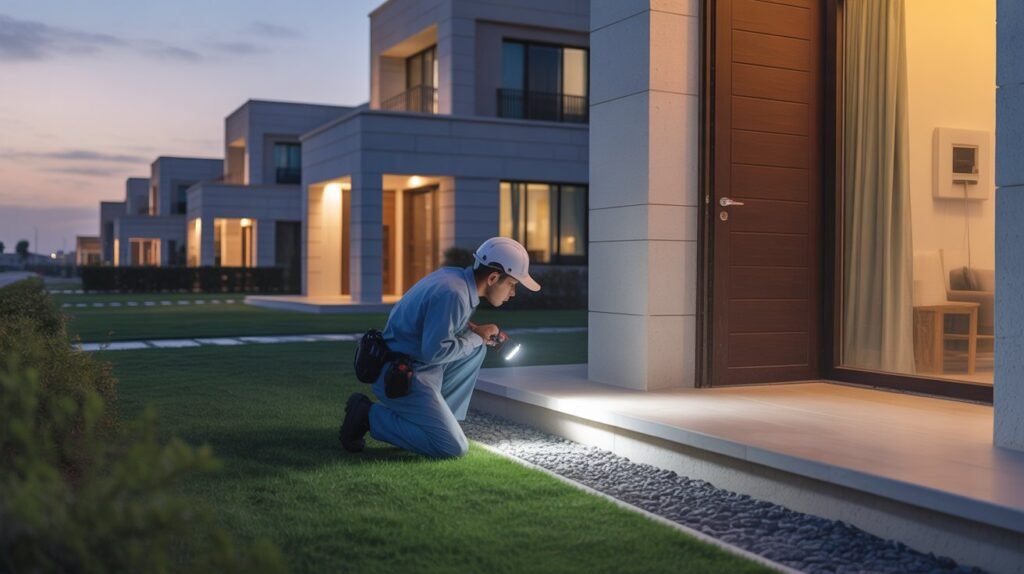
DIY approaches rarely work effectively against camel spiders. They are fast-moving, resilient, and often avoid treated surfaces. Pesticide sprays from a shop may offer temporary relief but will not address the underlying conditions that attract them to your property.
What Pest Control Dubai AE Does Differently
Thorough property inspection to locate nesting areas, entry points, and high-activity zones
Industry-grade residual insecticide treatments applied to targeted areas — not just a blanket spray
Habitat modification recommendations to make your property less attractive to camel spiders and their prey
Perimeter and barrier treatments to prevent new entry
Outdoor lighting management advice to reduce insect attraction
Safe, eco-friendly products that comply with UAE environmental regulations
Follow-up visits and monitoring to ensure the treatment is effective long-term
Pestcontroldubai.ae serves residential villas, apartments, commercial properties, desert resorts, farms, and construction sites across Dubai and the wider UAE. Our trained technicians understand the unique pest challenges of Dubai’s desert climate.
When to Call a Professional
You have spotted more than one camel spider in or around your property
You live near a desert or construction zone where sightings are more frequent
A family member, child, or pet has been bitten
You run a desert resort, camping facility, or farm and need ongoing management
You are about to move into a new property and want a pre-occupancy inspection
Camel Spider Season in Dubai — When Are They Most Active?
Camel spiders are most active during the warmer months in the UAE typically from spring through to the hot summer period. During this time, they are nocturnal and seek shade during the scorching daytime temperatures.
In cooler months (November to February), sightings become rarer as they retreat deeper into burrows.
However, the UAE’s year-round warm climate means that camel spiders are never entirely absent particularly in Dubai’s suburban fringes and desert-adjacent communities. Year round pest management contracts are the most effective approach for ongoing protection.
Conclusion
Camel spiders look frightening, and there is a lot of false information about them online. The truth is they are not venomous, they do not chase people to attack, and they are not as enormous as viral photos suggest. But they can deliver a painful bite, they carry bacteria, and their presence often points to a wider pest issue at your property.
If you spot a camel spider in your home or garden, do not panic but do take it seriously. Contact Pest Control Dubai AE today and let our experts take care of the problem for you