
What Is a Termite with Wings? Complete Guide for Dubai Homeowners

Have you ever seen tiny winged insects flying around your lights at night and wondered what they are? If you live in Dubai, there’s a good chance those are flying termites and they could be a serious warning sign for your home.
Flying termites in Dubai are more common than most people think. The hot, humid climate of the UAE creates the perfect conditions for termites to grow and spread. And when you see them flying, it usually means a termite colony nearby is getting bigger and looking for new places to settle.
The good news? If you catch them early and take the right steps, you can protect your home before they cause serious damage. This guide covers everything you need to know from what flying termites are to how to get rid of them for good.
Also Read : Camel Spider in Dubai: Identification, Dangers & What To Do
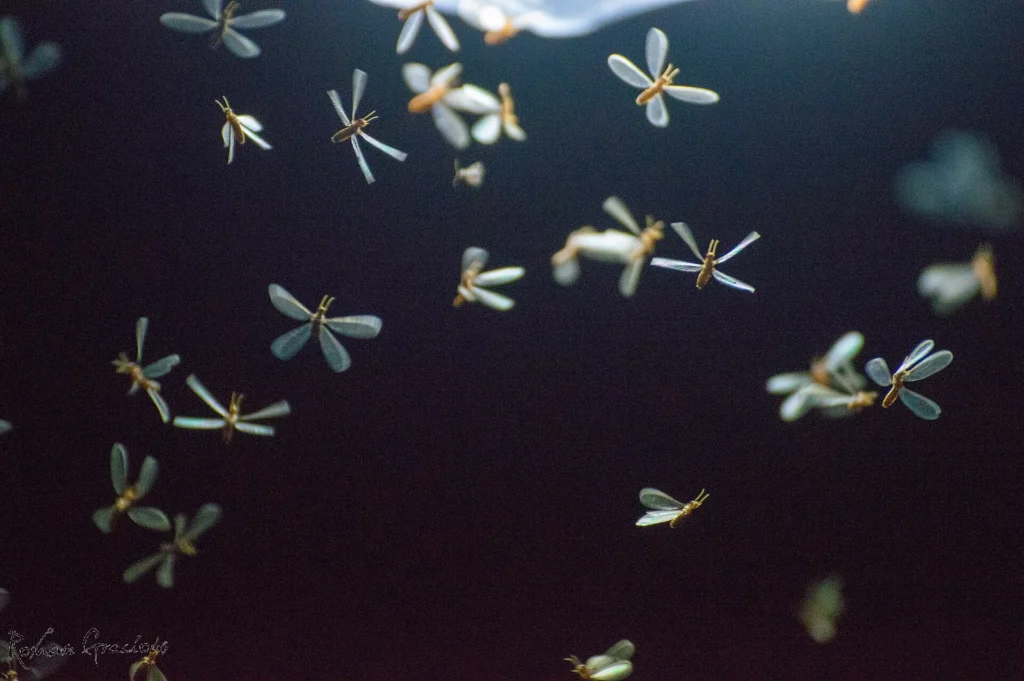
Source: https://commons.wikimedia.org/wiki/File:FLYING_TERMITES.jpg
What Are Flying Termites?
Flying termites are not a separate species of termite. They are actually termites in their reproductive stage, scientifically known as “alates” or “termite swarmers.”
Every mature termite colony produces a group of winged termites. These winged termites leave the nest in large numbers to find a partner, mate, and start a brand-new colony somewhere else. This event is known as a termite swarm.
After they swarm and land, they shed their wings. If you find tiny discarded wings piled near windows, doors, or light fixtures — that is a strong and serious warning sign that flying termites have recently visited your home.
Key Facts About Flying Termites
- They are the male and female reproductive members of a termite colony
- They are strongly attracted to bright lights — especially at night
- They shed their wings immediately after landing
- A single swarm can contain hundreds to thousands of insects
- Swarming events usually last between 30 and 60 minutes
- They do not eat wood themselves — but they start new colonies that will
Flying Termites vs Flying Ants — How to Tell the Difference
Many homeowners in Dubai confuse flying termites with flying ants. They look very similar at first glance, but there are clear differences you can spot with the naked eye.
| Feature | 🪲 Flying Termites | 🐜 Flying Ants |
|---|---|---|
| Waist shape | Straight, thick waist | Narrow, pinched waist |
| Wings | All 4 wings equal in length | Front wings longer than back wings |
| Antennae | Straight, beaded appearance | Bent or elbowed |
| Body color | Pale creamy white to dark brown | Dark brown or black |
| Risk to home | Very high — structural damage | Low — mostly a nuisance |
Why Do Flying Termites Appear in Dubai?
Dubai’s climate and urban environment create near-perfect conditions for termites to grow, multiply, and swarm. Here is why flying termites are so common across the UAE:
When Is Termite Swarming Season in Dubai?
In Dubai and across the wider UAE, flying termites are most active during specific times of the year. Knowing these seasons helps you stay alert and take preventive action before swarms arrive.
As temperatures climb after winter and humidity begins to rise, mature termite colonies send out their swarmers in large numbers. Rainfall especially triggers swarming behavior in many common termite species found in the UAE.
Do Flying Termites Mean I Already Have an Infestation?
This is the most common question we hear — and the honest answer is: it depends on what else you see.
Spotting a few flying termites near your window at night does not automatically mean your home is already infested. They may have travelled from a colony in a nearby tree, an empty plot, or your neighbour’s property.
However, if you notice any of the following signs alongside flying termites, your home may already be under attack:
- Piles of discarded wings near windows, doors, or light fixtures
- Mud tubes running along walls, floors, or the foundation
- Wood that sounds hollow when you tap it
- Bubbling, cracking, or peeling paint on walls
- Visible tunnels or damage inside wooden furniture and cabinets
- Tiny dark droppings (called frass) near wood surfaces or skirting boards
- Doors or windows that suddenly become difficult to open or close
How Dangerous Are Flying Termites?
Flying termites themselves do not bite, sting, or carry disease. In that sense, they are not directly dangerous to people or pets.
But here is the real danger: every flying termite you see is the beginning of a potential new colony. Once they land, shed their wings, and pair up, they start laying eggs. Within just a few months, a new colony of hundreds — or even thousands — of worker termites can form silently inside your walls, floors, and furniture.
Termites eat wood from the inside out. By the time you see visible damage, the problem is already severe and costly to repair.
Termite damage in Dubai can cost tens of thousands of dirhams — and most home insurance policies do NOT cover it.
A colony can destroy wooden beams and furniture within 1 to 2 years if untreated — all without any visible signs early on.
Signs of a Termite Infestation in Your Dubai Home
Beyond seeing flying termites, here are the most important warning signs that termites are already active inside your property:
Structural Warning Signs
- Sagging, bouncy, or soft floorboards that feel unstable underfoot
- Doors and windows that suddenly warp and become hard to open or close
- Cracks or bubbling appearing in walls or ceiling plaster
- Wood in cabinets, shelves, or frames that feels soft or crumbles when pressed
Visual Signs
- Mud tubes — pencil-thin tunnels of dirt running up exterior walls or foundations
- Small pin-sized holes in drywall, wooden surfaces, or skirting boards
- Piles of discarded wings near entry points, windows, and light fittings
Sound Signs
- A faint clicking or hollow rustling sound from inside walls — this is soldier termites tapping their heads to warn the colony of danger
How to Get Rid of Flying Termites
If you see flying termites in or around your home, follow these five steps immediately:
- Boric acid powder — applied to cracks and entry points to kill termites on contact
- Termite bait stations — placed around the perimeter to attract and eliminate foraging workers
- Liquid termiticides — applied to soil around the foundation to create a chemical barrier
Prevention Tips: How to Protect Your Dubai Home
Prevention is always less expensive and less stressful than treatment. Follow these practical tips every Dubai homeowner should know:
💧 Reduce Moisture
- Fix leaking pipes and taps immediately
- Ensure drainage flows away from your foundation
- Ventilate crawl spaces and storage areas
- Service AC drainage lines regularly
🪵 Remove Food Sources
- Store firewood away from exterior walls
- Clear dead wood and tree stumps from your garden
- Never store cardboard boxes directly on the floor
- Inspect second-hand wooden furniture before bringing inside
🚪 Seal Entry Points
- Caulk all cracks in walls and around window frames
- Install door sweeps to block ground-level gaps
- Screen roof vents and foundation openings
- Seal utility entry points around pipes
💡 Smart Lighting
- Switch outdoor bulbs to warm yellow or sodium vapor tones
- Close blinds and curtains during swarming season at night
- Use motion-activated lights to reduce continuous illumination
Why Choose Professional Termite Control in Dubai?
Termites cause structural damage worth millions of dirhams across the UAE every single year. Professional pest control in Dubai is not just about treating a current problem — it is about protecting one of your biggest investments: your home.
- Expert identification: Professionals identify the exact termite species and colony type — which determines the safest and most effective treatment method
- Advanced equipment: Licensed companies use soil injectors, drilling machines, and professional baiting systems not available to the public
- UAE-approved treatments: All chemicals used are approved for use in the UAE and are safe for your family and pets when applied correctly
- Long-term protection: Professional services include scheduled follow-ups and warranties — giving lasting protection, not just a one-time fix
- Peace of mind: You know the job has been done thoroughly — not just on the visible surface, but deep inside your walls and soil
Frequently Asked Questions About Flying Termites in Dubai
Final Thoughts
Flying termites in Dubai are a warning you should never take lightly. When you see them, it means a mature termite colony is very nearby — and possibly already growing silently inside your home.
The hot climate, seasonal humidity, constant construction, and bright city lighting all make Dubai one of the highest-risk environments for termite activity in the region. The good news is that with early detection, smart prevention, and professional treatment, your home can be fully protected.
Do not let a small swarm become a major, costly structural disaster. Act early, act smart — and call the professionals when you need them.
Protect Your Home from Flying Termites Today
Seeing flying termites in or near your Dubai home? Don’t wait until the damage is done. Our certified pest control specialists are ready to inspect, treat, and protect your property — fast.
📞 Get a Free Inspection Now ✔ Serving all areas of Dubai | ✔ UAE-approved treatments | ✔ Results guaranteed